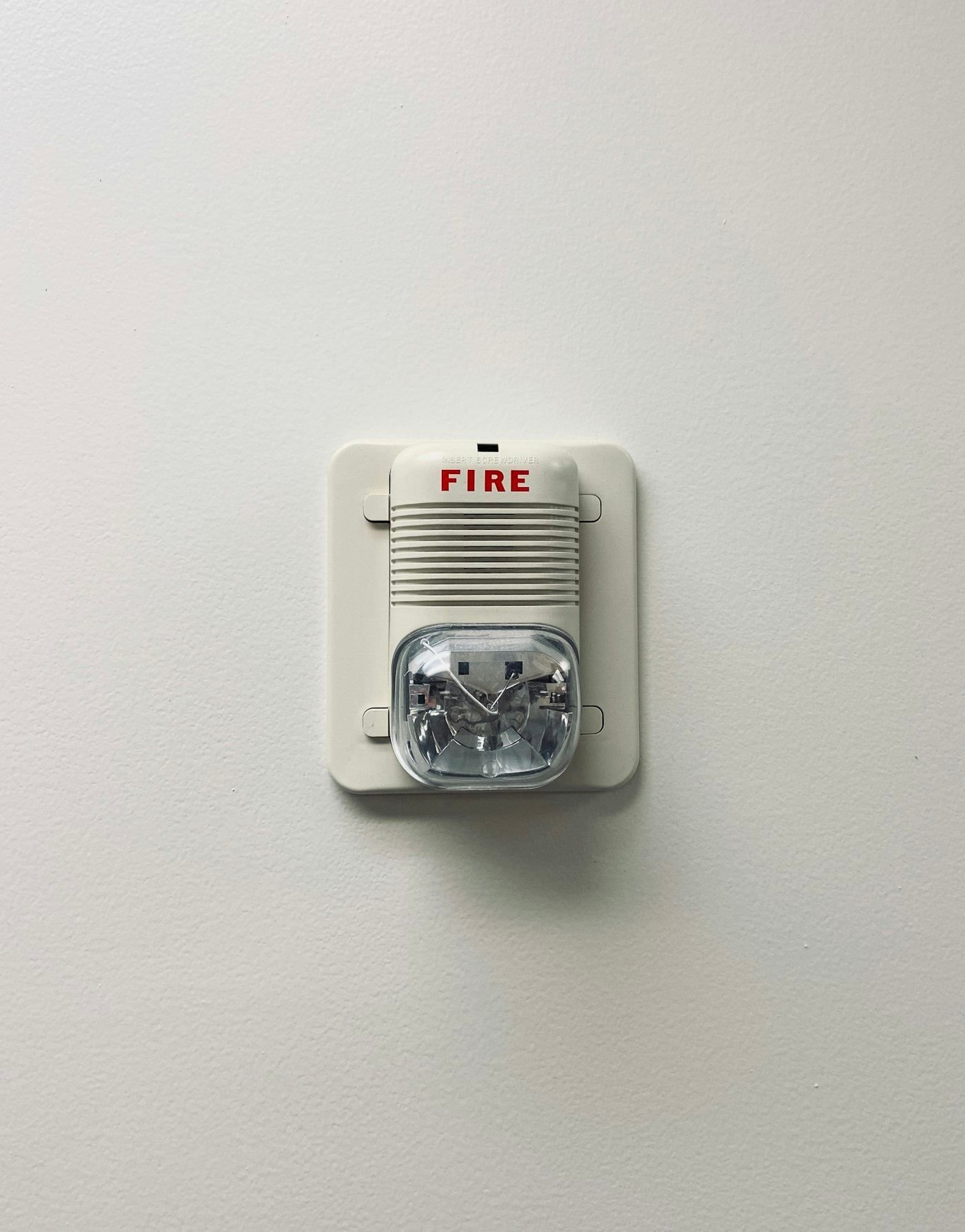
- Every level of a NSW home needs a working smoke alarm. Fire and Rescue NSW recommends one in every bedroom for extra protection.
- In a rental, the landlord must check alarms yearly, fix faults within 2 business days and replace alarms within 10 years of manufacture.
- Tenants must report faults, and can change a removable battery in some cases if they follow the notice steps.
- An alarm that is old, flat or removed does not protect anyone. The rules exist because they save lives.
Most house fires do not start at 2pm when everyone is awake and watching. They start at night, when the household is asleep and the only thing that stands between a small fire and a disaster is a small plastic disc on the ceiling. The law in NSW sets out where those discs must be and who looks after them. The rules are fairly short, but they are often misunderstood, especially for rentals, strata and people with hearing loss.
This guide summarises information published by Fire and Rescue NSW and the NSW Government. Rules can change. Check fire.nsw.gov.au and nsw.gov.au before you rely on a detail.
The big picture: three questions that cover 90% of cases
You are responsible for the alarms. At a minimum you need one on every level of the home, including levels without bedrooms. Place them in hallways near bedrooms. If bedrooms are in different areas, put an alarm in each area. If there is no hallway, put one between the bedroom area and the rest of the home. Fire and Rescue NSW recommends one in every bedroom for higher protection.
Your landlord must keep the alarms working. That duty cannot be moved to you in the tenancy agreement. You must tell the landlord promptly when an alarm is not working, including a flat battery.
It depends on who looks after the alarms. If the owners corporation is responsible for hard-wired alarms or battery alarms, the landlord's duties change, but only if specific conditions are met, including written notice to the tenant. Tenancy agreements since March 2020 must state whether the owners corporation is responsible.
Where alarms go
- Every level. Including a level with no bedrooms, such as a living area or basement.
- Hallways near bedrooms. This is the minimum. The alarm should sit where it will wake sleepers.
- Between sleeping and living areas. If there is no hallway, put one between the bedrooms and the rest of the home.
- In each bedroom (recommended). This gives earlier warning where people sleep.
Smoke alarms need clear ceiling space and should not sit next to kitchens and bathrooms where steam and cooking can trigger nuisance alarms. Follow the manufacturer's guidance on placement.
Landlord duties, step by step
| Duty | What it means |
|---|---|
| Working order | Alarms must be kept working. The tenancy agreement cannot shift this to the tenant |
| Yearly check | Each alarm checked every year |
| Battery | Removable batteries replaced yearly, or at the manufacturer's interval for lithium |
| Repairs | Faults, including a flat battery, repaired within 2 business days |
| Replacement | Within 10 years of manufacture, or sooner if the manufacturer says so |
| Notice to inspect | At least 2 business days |
| Notice to repair or replace | At least 1 hour |
| Hard-wired alarms | Repairs by a licensed electrician |
Tenant duties, step by step
If you rent, the rules ask less of you than of the landlord, but they still matter.
- Tell the landlord or agent
The moment an alarm is not working, including a flat battery, tell them in writing so you have a record.
- Give them a chance to act
The landlord has 2 business days to repair or replace after learning of the fault.
- Changing a removable battery
A tenant may change a removable battery after notifying the landlord, doing it within 2 business days of that notice, and informing the landlord within 24 hours afterwards. This does not apply to social housing tenants.
- Hard-wired alarms
If the landlord does not complete the repair within 2 business days, a tenant may arrange a licensed electrician.
- Reimbursement
A tenant who pays can claim reimbursement within 7 days by giving written notice of the costs with receipts. This also does not apply to social housing tenants.
Removing an alarm, taking the battery out to stop it chirping, or covering it up is dangerous, and in rentals it is a breach of the rules. If it keeps going off from cooking, ask the landlord to move it or change the type.
The 10-year rule: why old alarms stop protecting you
Smoke alarms wear out. The sensors inside lose sensitivity over time, even if the alarm still beeps when you press the test button. The rule in NSW rentals is to replace alarms within 10 years of manufacture or earlier if the manufacturer specifies. The manufacture date is printed on the back of the alarm. If you cannot find a date, or the alarm is old, replace it.
You test your smoke alarm and it beeps. It was installed 12 years ago. What should you do?
- Nothing, it beeps, so it works
- Replace it, because the 10-year life has passed
- Change the battery and keep it another few years
The test button checks the battery and the horn, not how well the sensor detects smoke after years of dust and ageing. In NSW rentals alarms must be replaced within 10 years of manufacture. At home, replacing at 10 years is sensible practice.
Which type? Photoelectric, ionisation and everything else
The page that sets out the NSW legal minimums does not require a specific sensor type, so it helps to know the basics. Fire services in Australia generally recommend photoelectric smoke alarms in homes because they tend to respond well to slow, smouldering fires, which are common at night. Ask the supplier or electrician which type they are fitting, and make sure it meets the Australian Standard for smoke alarms (AS 3786).
You also choose between battery-powered and hard-wired alarms. Battery alarms are simple to install. Hard-wired alarms are connected to the mains (usually with a backup battery) and must be installed by a licensed electrician. Interconnected alarms sound together, so a fire in the garage is heard in the bedroom. Many people consider interconnection one of the most valuable upgrades.
When a standard alarm is not enough
A standard smoke alarm relies on sound. For someone who is deaf or hard of hearing, or a heavy sleeper on medication, sound may not wake them. Visual and vibrating alarms add flashing lights, bed shakers or pillow pads that connect to the smoke alarm. We cover these in more detail in our guide to visual smoke alarms. If someone in your home needs this, talk to a licensed installer, and to an occupational therapist where relevant.
Strata and social housing: the twists
In a strata building the owners corporation may be responsible for alarms, especially if they are hard-wired in common areas or built into the building system. The landlord's duties change only if all the required conditions are met: the alarms are hard-wired or are battery-operated and handled by the owners corporation, the landlord has told the tenant in writing, the landlord notifies the owners corporation within 24 hours of learning of a problem, and the landlord takes reasonable steps to get it done.
Social housing tenants are treated differently for some tenant steps, including notification and battery changes. Check with your housing provider about how they handle alarms.
Your yearly smoke alarm routine
- Press the test button on every alarm and make sure it sounds
- Replace removable batteries (or follow the lithium battery guidance)
- Vacuum or gently dust the alarm to clear cobwebs and dust
- Check the manufacture date on the back, and replace if it is nearing 10 years
- Check there is an alarm on every level and near every sleeping area
- Make sure nothing is covering or blocking the alarm
- Practise your escape plan and have a second way out
- For rentals: put the check date in writing and keep it
Myths and mistakes
"The alarm beeps when I test it, so it is fine."
The test confirms the battery and horn work. It does not tell you the sensor still detects smoke well after years of use.
"I will take the battery out while I cook."
This is how alarms end up without batteries when the fire starts. Move the alarm, use the hush button or ask for a different type.
"One alarm in the hall covers a two-storey house."
Every level needs its own alarm, including levels without bedrooms.
"My landlord can make me responsible for the alarm in the lease."
A tenancy agreement cannot shift the landlord's duty to keep the alarms working.
What to do if the alarm in your rental does not work
- Write it down
Email or message the landlord or agent that the alarm is faulty, with the date and what is wrong.
- Wait 2 business days
The landlord must repair or replace within 2 business days of learning of the fault.
- Follow up in writing
If nothing happens, remind them and keep copies. For hard-wired alarms you may arrange a licensed electrician if the deadline passes.
- Contact NSW Fair Trading
If you are stuck, Fair Trading can advise on your rights.
How we can help
We supply and install smoke alarms, including interconnected and visual options, and we can fit them with licensed electricians for hard-wired work. If you are an owner, a landlord or a tenant with permission, we can quote a full set and put a date on each alarm so you know when it is due. See our smoke alarms and visual alerts page or book a free site visit.
Your first week: a simple action plan
You do not have to do everything at once. This sequence keeps things moving without overwhelm.
- Step 1
Count alarms and check there is one on each level and near bedrooms.
- Step 2
Find the date of manufacture on the back of each alarm.
- Step 3
Replace any older than ten years.
- Step 4
Test every alarm using the test button.
- Step 5
Plan and practise an escape route.
- Step 6
Diarise the next test.
Plain-English glossary
- Interconnected
- Alarms linked so that all sound together.
- Hard-wired
- Powered from the mains with a battery backup.
- Photoelectric
- A type of smoke sensor that responds well to smouldering fires.
- Strata
- A building where an owners corporation manages common areas.
What happens at a Nemco site visit
If you would like a second pair of eyes, we visit the home, listen to the person first and look at the spaces they actually use. We take measurements and photos, check access for tradespeople and talk through the options in plain language, including simpler or cheaper ones where they will do the job. You then receive a written, itemised quote that your therapist, plan manager or family can read and compare. There is no obligation to proceed, and we will tell you if something is outside what we do. We also explain what each step involves for the person living there, how long the work is likely to take, whether the home can be used while it happens, and who to call if something does not work as expected after handover.
What to have ready
- Any therapist or hospital letters, or the name of the person coordinating care
- Photos or a rough sketch of the rooms involved
- A list of the times of day the person finds things hardest
- Landlord, strata or owner details if the home is not owned
- Your funding pathway, if you know it, or the name of the plan manager
When to bring in a professional sooner
If the person has had a recent fall, a change in health, a hospital stay or a new diagnosis, or if you are unsure whether a change is safe, speak to an occupational therapist or doctor before making changes. A quick conversation early can save money and avoid doing the wrong thing.
Questions to talk through at home
- Who is responsible for the alarms here: owner, tenant or strata?
- Would everyone in the home hear the alarm at night?
- Is there a plan for someone who cannot get out unaided?
- When were they last tested?
Last checked: November 2026. Rules, prices and program details change, so confirm with the source before you act. Summary of NSW Government and Fire and Rescue NSW pages on smoke alarms at that date.
Common questions
Where do smoke alarms have to go in a NSW home?
On every level, in hallways near bedrooms. If bedrooms are in different areas, one in each area. Fire and Rescue NSW recommends one in every bedroom.
How often must a landlord check smoke alarms?
Every year, with removable batteries replaced yearly (or lithium batteries at the manufacturer's interval).
How long does a landlord have to repair a faulty alarm?
Within 2 business days of learning it is faulty.
When must smoke alarms be replaced?
In NSW rentals within 10 years of manufacture, or sooner if the manufacturer specifies.
Can a tenant change the battery?
In some cases, yes, if they follow the notice steps. This does not apply to social housing tenants.