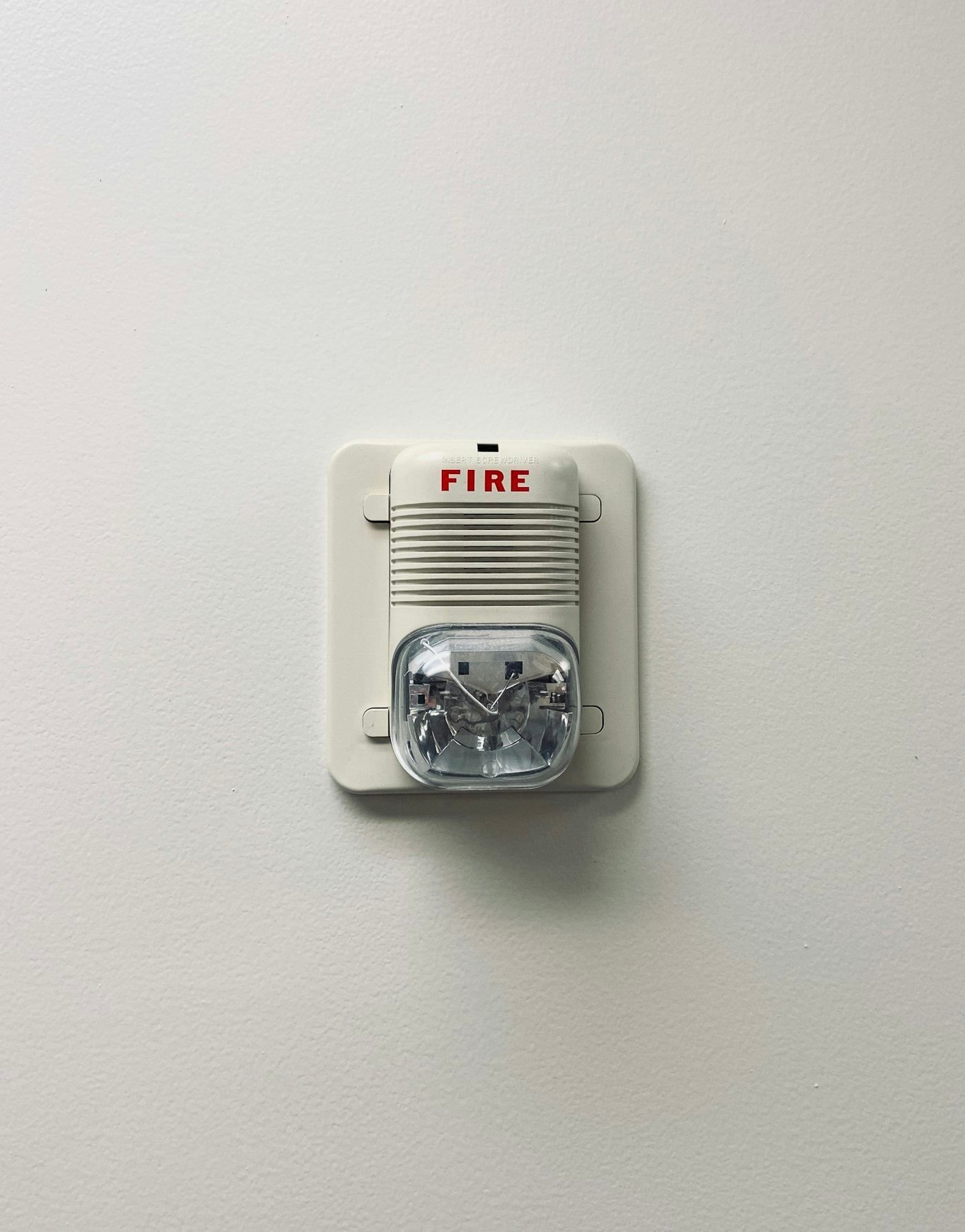
- A standard smoke alarm is built around sound. If you take out your hearing aids or have profound hearing loss, you may not wake up.
- Visual alarms use bright flashing lights. Vibrating alarms use a bed shaker or pillow pad. Many homes use both.
- The devices need to be connected to the smoke alarm system so they trigger together.
- Test them for real, at night, with the person who relies on them.
Imagine the worst moment for fire: 3am, everyone asleep, a small fire starting in the lounge room. A hearing person is woken by a piercing alarm in seconds. Now imagine someone who is deaf, or who takes out hearing aids at night, or whose hearing loss is moderate to severe. For them, the alarm that wakes everyone else is little more than a distant buzz. They may sleep through it.
That is why alarms that flash and shake exist. This guide explains how they work, how to choose, and how to make sure they will wake the person when it matters.
Fire safety decisions for a specific person should involve the person, a licensed installer and, where relevant, advice from Fire and Rescue NSW and the person's own support network. This guide is general information.
Why standard alarms fall short
A normal smoke alarm sounds at high volume and a particular pitch. People with age-related hearing loss often lose high-frequency hearing first, and typical alarms sit in those pitches. People who sleep deeply, take medication that causes drowsiness, or remove hearing devices at night can be at even higher risk. The result is a smoke alarm that is doing its job, but not reaching the person it is meant to protect.
The three ways to wake someone up
Louder or lower-pitched alarms can help people with mild to moderate hearing loss. Some alarms use a lower frequency that is easier to hear. This may be enough for some people and not enough for others. It should never be the only layer for someone who relies on sight and touch.
A strobe or flashing light unit placed in the bedroom and other key rooms. It needs to be bright enough to wake someone, and positioned so it will be seen when the person is lying down, including with their eyes closed. Consider the room layout and any blackout curtains.
A bed shaker, which sits under the mattress, or a pillow pad, which sits under the pillow. It physically shakes the sleeper awake. For many deaf people, this is the most reliable method at night.
How the system connects
A visual or vibrating alert is only useful if it triggers when the smoke alarm does. There are three common ways to achieve this.
- A smoke alarm with a built-in connection. Some alarms can send a signal to a strobe or shaker directly, by wire or by radio.
- A separate receiver. The receiver listens for the smoke alarm sound or signal and triggers lights or shakers.
- A smart home hub. Some systems can trigger lights or notifications on a phone or watch when the alarm goes off. This is a helpful extra but should not be the only layer.
Whichever way you go, ask the installer to explain exactly what triggers what, and test it. Check that the devices are compatible and meet the relevant Australian Standards.
A phone on the bedside table can only wake someone who has it in the room, charged, with the sound or vibration on, and is able to notice it. It is a useful additional layer, but a bed shaker or strobe connected to the alarm is a more dependable first layer.
Where to put the alerts
| Room | Why | What to think about |
|---|---|---|
| Bedroom | This is where the highest risk is | Place the strobe where it will be seen from the bed, and use a bed shaker or pillow pad |
| Hallway | The route out | Consider a strobe at the end of the hall so it is visible from several rooms |
| Living room | Most waking-hours time | A strobe on a shelf or wall visible from the main seat |
| Bathroom and laundry | Hard to hear in rooms with fans or running water | A strobe or a vibrating device on a keyring or wearable |
| Outbuilding or granny flat | A separate sleeping space | Needs its own alarm and alert, connected to the main system if possible |
An escape plan that works without sound
The alarm is only the first step. The next question is what the person does when they wake. A good fire escape plan for someone who is deaf or hard of hearing covers the following.
- Know two ways out of every room
Windows and doors that open easily. Remove anything that blocks them.
- Decide where to meet
A spot outside, away from the house, where everyone gathers.
- Practise at night
Test the system with the lights off and without hearing devices, as it will happen in real life.
- Tell neighbours and family
Someone nearby who knows the person might not hear an alarm can raise the alert.
- Keep hearing devices within reach
A charged hearing aid on the bedside table, or a good habit of putting it on when the alarm goes.
- Contact the fire service
Fire and Rescue NSW offers fire safety advice for the community. Ask whether they have resources for people who are deaf or hard of hearing.
Renting and strata
In NSW rentals, the landlord must keep smoke alarms working and replace them within 10 years of manufacture. Visual or vibrating alerts for a specific tenant are usually an addition to the standard alarms, rather than a replacement. If you rent, talk to the landlord or agent before fitting anything fixed or wired, and put the agreement in writing. In strata buildings the owners corporation may be responsible for the main alarm system, so ask them how an additional alert can be connected. Our guide to smoke alarm rules in NSW explains the basics.
Funding
For NDIS participants, visual or vibrating alarms might be considered assistive technology where they are related to the person's disability and are reasonable and necessary. For older Australians, the AT-HM scheme in Support at Home may be an option. Some state and community programs may also offer help, so ask the person's hearing service, OT or support coordinator. Evidence of need, such as an audiologist or OT letter, makes any application stronger.
A readiness check
- The person takes out hearing aids or implants at night
- The person is deaf or has severe hearing loss
- They did not wake to a smoke alarm test during the night
- They sleep deeply or take sedating medication
- The bedroom is far from the nearest smoke alarm
- They live alone or sleep in a separate building
- They use a phone as their only alert
- There is no practised plan for getting out at night
Questions to ask the supplier or installer
- Is the system compatible with the smoke alarms already in the home?
- How do the strobe and shaker connect: wire, radio or hub?
- What happens if the power fails or the battery runs flat?
- Is it tested and compliant with Australian Standards?
- Can the person try the shaker or strobe before I decide?
- Who tests it with me, and how often should I test it?
Common mistakes
Do
- Test the system at night, with the lights off
- Use a strobe and a shaker together where possible
- Replace batteries and check devices on a regular schedule
- Keep the person involved in choosing and testing
Don't
- Rely on a phone alone
- Place the strobe where it is blocked by furniture or curtains
- Assume a loud alarm is enough
- Install and walk away without testing
Myths people believe
"A very loud alarm will wake anyone."
Not necessarily. Pitch, sleep depth, medication and hearing devices all matter, and some people will not wake to even a loud alarm.
"My phone will wake me."
Only if it is nearby, charged, switched on, and the person notices it. A connected strobe or shaker is more reliable.
"We tried it once and it worked."
Test regularly, including at night. Conditions change, batteries die and furniture moves.
"This is a luxury."
For the person who cannot hear the alarm, it is the difference between an alert and no alert.
How we help
We supply and install interconnected smoke alarms with visual and vibrating alerts, and coordinate a licensed electrician where needed. We will test the system with you at handover. See our smoke alarms and visual alerts page or book a free site visit.
Your first week: a simple action plan
You do not have to do everything at once. This sequence keeps things moving without overwhelm.
- Step 1
Ask the person how they wake now and what they hear without devices.
- Step 2
Test the current alarm at night, with devices out.
- Step 3
Choose a strobe and a shaker that connect to the alarm system.
- Step 4
Place them in the bedroom and key rooms.
- Step 5
Practise the escape plan in the dark.
- Step 6
Test monthly and replace batteries on schedule.
Plain-English glossary
- Strobe
- A bright flashing light that signals an alarm.
- Bed shaker
- A vibrating pad that wakes a sleeper.
- Interconnect
- A link between alarms and alert devices.
- Receiver
- A unit that listens for the alarm and triggers the alerts.
What happens at a Nemco site visit
If you would like a second pair of eyes, we visit the home, listen to the person first and look at the spaces they actually use. We take measurements and photos, check access for tradespeople and talk through the options in plain language, including simpler or cheaper ones where they will do the job. You then receive a written, itemised quote that your therapist, plan manager or family can read and compare. There is no obligation to proceed, and we will tell you if something is outside what we do. We also explain what each step involves for the person living there, how long the work is likely to take, whether the home can be used while it happens, and who to call if something does not work as expected after handover.
What to have ready
- Any therapist or hospital letters, or the name of the person coordinating care
- Photos or a rough sketch of the rooms involved
- A list of the times of day the person finds things hardest
- Landlord, strata or owner details if the home is not owned
- Your funding pathway, if you know it, or the name of the plan manager
When to bring in a professional sooner
If the person has had a recent fall, a change in health, a hospital stay or a new diagnosis, or if you are unsure whether a change is safe, speak to an occupational therapist or doctor before making changes. A quick conversation early can save money and avoid doing the wrong thing.
Questions to talk through at home
- What would wake the person at 3am?
- Does the alert reach every sleeping space?
- Who else should know the plan?
- When is the next test?
Last checked: November 2026. Rules, prices and program details change, so confirm with the source before you act. Product capabilities and standards vary. Confirm with your installer and the relevant authority.
Common questions
Do visual alarms replace normal smoke alarms?
No. They work with your smoke alarms, so that when a smoke alarm goes off, lights and shakers go too.
What is a bed shaker?
A device that sits under the mattress or pillow and vibrates when the smoke alarm sounds, to wake the sleeper.
Will a flashing light wake someone with their eyes closed?
A bright strobe can, but position and brightness matter. Many people use a shaker as well.
Can I use my phone instead?
A phone can be an extra alert, but it is not a reliable first layer on its own.
Who pays for it?
It depends on the pathway. NDIS or Support at Home may apply for some people, and private options exist. Check with your support network.