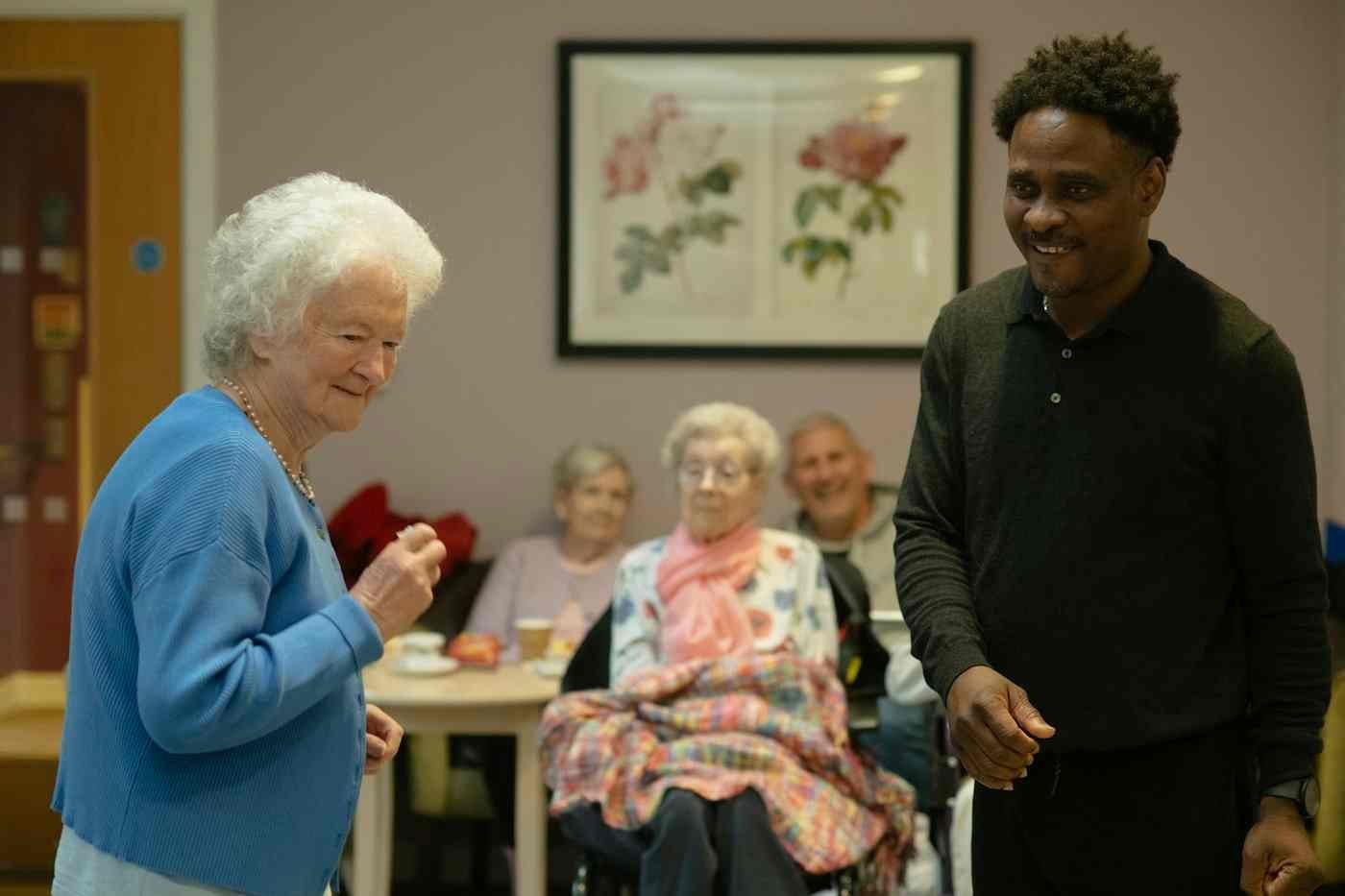
- An occupational therapist (OT) looks at how the person actually does everyday tasks in their own home, then recommends changes and equipment that fit.
- You get the best result when the person is there, the hardest tasks are shown rather than described, and family or carers join in.
- The report is the document that links need to solution. Funders, plan managers and builders all rely on it.
- Bring photos, questions and a list of what is hardest. Leave the guesswork about solutions to the OT.
When people think about home modifications, they usually picture the building work: the ramp, the rail, the new shower. But the most important step happens before anyone picks up a drill. It is a conversation, a few measurements and an hour of watching someone get out of a chair, open a door or step into a bathroom. That is an OT home assessment, and it is why a modification fits a person rather than a floor plan.
What an OT is looking for
An occupational therapist focuses on function: what the person wants and needs to do, what gets in the way, and how the environment, equipment and routines can change to close the gap. In a home assessment that usually means three layers.
The person. Strength, balance, vision, memory, fatigue, pain, how they move and transfer, and what is likely to change over the next few years. A progressive condition and a recovery from surgery lead to very different recommendations.
The tasks. Getting out of bed, toileting, showering, dressing, preparing food, getting in and out of the home, using stairs, managing night-time routines. The OT picks the ones that matter most to the person.
The environment. The width of the doors, the height of the toilet, the surface of the floor, the position of switches, the layout of the kitchen, the number of steps at the front door. Also the people in the house, since a carer's needs matter as well.
How the visit usually runs
- The conversation
The OT asks what a normal day looks like, what is hard, what the person wants to keep doing, and what worries the family. This is the moment to be honest, including about the things that seem embarrassing.
- Watching real tasks
Where it is safe, the OT asks the person to show how they get into the shower, stand from the toilet or move through a doorway. Watching beats describing, because most people have workarounds they no longer notice.
- Measuring and photographing
Door widths, step heights, turning space, bench heights, rail positions. The OT may also check the type of wall and floor, because that affects what can be fixed where.
- Trialling equipment
Some OTs bring sample equipment to try: a shower stool, a rail, a transfer aid. Trying before you buy avoids expensive mistakes.
- Talking through options
You may hear a few options with trade-offs: a staged approach, a temporary solution, a permanent change. The best OTs explain why.
- The report
A written report follows, usually within days or weeks depending on the service. It lists recommendations, and often the reasons for each.
How to prepare: the 15-minute homework
You do not need to tidy the house or hide the problem. In fact, the opposite is better. The visit works best when the real home is on show, with the real clutter and the real workarounds.
- Write down the three hardest things in a normal day
- Note any falls, near-falls or close calls, and where they happened
- Take photos of the entry, bathroom, bedroom and kitchen
- List current equipment, including anything borrowed or unused
- Gather previous reports, discharge summaries or plan documents
- Have the people who help the person (family, carers, support workers) present or available by phone
- Write down what the person wants to be able to do again
- Check who owns the home and whether approval will be needed for changes
What makes a good OT report
The report is the document everything else hangs off, so it is worth knowing what to look for. A useful home modification report usually includes:
- The person's goals and the problems the changes are meant to solve
- A description of the current situation, with measurements and photos where appropriate
- Specific recommendations, not just "install rails", but where, how many and why
- Notes about future needs, so a change made now does not have to be redone in a year
- Where relevant, a staged plan with priorities
- The OT's name, qualifications and registration details
A builder cannot guess whether a rail should be horizontal, vertical or angled, or on which side. If the report says "grab rails to bathroom", you can end up with a rail in the wrong place. Ask the OT to be specific, or ask us to talk it through with them.
What the OT will not do
It helps to know the limits. An OT recommends; they do not usually install. They are not responsible for the structural design, builder's quote or council approval. On more complex jobs, other people join the team, such as an independent building consultant or certifier. And the OT is not responsible for funding decisions, although their report is a major input.
Who can do the assessment, and how do you find one?
If you are an NDIS participant, a suitably qualified OT can be engaged for an assessment as part of your supports. Check your plan and talk to your support coordinator. For older Australians, assessments through the aged care system are the starting point. Your provider or assessor will explain how an OT is involved.
Private OTs with home modification experience can be found through their professional association and through local referrals. Ask about their experience with the type of work you need, their fees, how soon they can visit, and how long the report takes.
If someone is about to leave hospital, the ward OT can often advise on equipment and early changes. They may do a home visit or review photos. They do not always do detailed home modification reports, but their notes are a valuable starting point.
Questions to ask the OT
- What changes would make the biggest difference first?
- Which of these are temporary, and which are permanent?
- How will this work if the person's needs change?
- Is there anything we should avoid fixing to the walls or floor?
- Will you speak to the builder or installer directly if we ask?
- When will the report be ready, and what format will it be in?
After the report: from recommendation to reality
- Share the report with the builder or installer
The person doing the work needs to read the recommendations, not just see the quote request. We will confirm what is possible and flag anything that needs a second look.
- Get an itemised quote
The quote should refer back to the report so the link between recommendation and item is clear to a funder or plan manager.
- Check funding and approvals
This may involve the NDIA, a provider, a landlord or a strata committee. See our guide to how home modifications are funded.
- Do the work, then review it
A good job ends with a handover where the person who will use it tries it with the installer, and the OT can check the result where appropriate.
Myths about OT assessments
"An OT will just tell us to spend more money."
The best ones help you spend less, by choosing the change that matters most and warning you off things that will not work.
"We know what we need, we do not need an assessment."
Families often identify the problem correctly. The solution is where mistakes happen, such as a rail in the wrong place or a ramp at the wrong gradient.
"The OT will take over."
The assessment is for the person, so their goals lead. Family input matters, but it is not a substitute for the person's own voice.
"Once the report is done, that is it."
Needs change. A good report notes that, and the OT can review later if circumstances shift.
Working with us after the assessment
We can take an OT's recommendations and turn them into a clear quote with licensed trades where the work needs them. If you are not sure what to ask the OT, or you want us to join a visit to answer builder questions, say so when you book. Therapists can also use our referral form to send a client's details in about two minutes.
Your first week: a simple action plan
You do not have to do everything at once. This sequence keeps things moving without overwhelm.
- Step 1
Write a short list of the tasks that are hard: bathing, toileting, stairs, getting in and out.
- Step 2
Gather any medical or hospital letters.
- Step 3
Take photos of the rooms and entry.
- Step 4
Make sure the person who lives there is at the visit.
- Step 5
Ask how long the report takes and who receives it.
- Step 6
Ask us for a quote once the recommendations are in.
Plain-English glossary
- Functional assessment
- Looking at what the person can do in daily tasks.
- Recommendation
- What the OT advises, with reasons.
- Scope of works
- A written description of the changes to be made.
- Complex home modification
- A larger or structural change that usually needs more evidence.
What happens at a Nemco site visit
If you would like a second pair of eyes, we visit the home, listen to the person first and look at the spaces they actually use. We take measurements and photos, check access for tradespeople and talk through the options in plain language, including simpler or cheaper ones where they will do the job. You then receive a written, itemised quote that your therapist, plan manager or family can read and compare. There is no obligation to proceed, and we will tell you if something is outside what we do. We also explain what each step involves for the person living there, how long the work is likely to take, whether the home can be used while it happens, and who to call if something does not work as expected after handover.
What to have ready
- Any therapist or hospital letters, or the name of the person coordinating care
- Photos or a rough sketch of the rooms involved
- A list of the times of day the person finds things hardest
- Landlord, strata or owner details if the home is not owned
- Your funding pathway, if you know it, or the name of the plan manager
When to bring in a professional sooner
If the person has had a recent fall, a change in health, a hospital stay or a new diagnosis, or if you are unsure whether a change is safe, speak to an occupational therapist or doctor before making changes. A quick conversation early can save money and avoid doing the wrong thing.
Questions to talk through at home
- What does the person want to keep doing, not just stop doing?
- Will needs change over the next few years?
- Who will see the report, and can we have a copy?
- Is a follow-up visit included?
Last checked: November 2026. Rules, prices and program details change, so confirm with the source before you act. This guide describes common practice. Individual OT services and programs vary.
Common questions
How long does a home assessment take?
Often one to two hours for a standard visit, though complex homes or several people can take longer. The report may follow in days to weeks.
Do I need to be home?
Yes, the person needs to be there so the OT can see how they do tasks. A family member or carer can join as well.
Can we use photos instead of a visit?
Sometimes, for simple questions, but a visit is usually better for modification decisions because measurements and movement matter.
Does the OT choose the builder?
Usually no. The OT recommends what is needed. You or the funding pathway choose who does the work.
Who pays for the assessment?
It depends on the pathway. Some programs fund assessments, others do not. Check with your coordinator, provider or the OT.