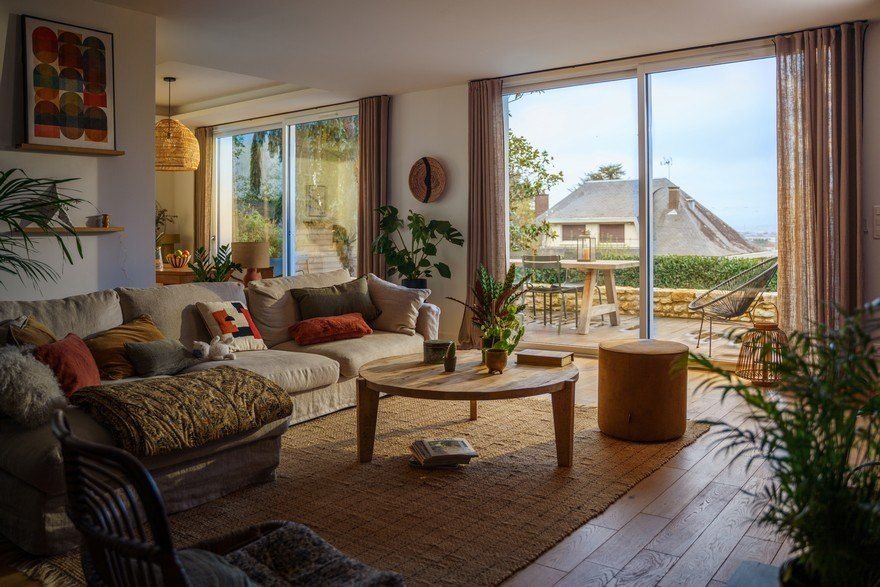
- Motorised curtains and blinds open and close at the press of a button, a remote, a schedule or a voice command.
- The right system depends on the person's hands, the type of window covering and how the home is wired.
- Always keep a manual option. Power cuts, flat batteries and Wi-Fi outages happen.
- Budget for the motor, the control and the installation, not just the motor.
For most of us, opening the curtains is a thought we barely notice. For someone with reduced arm strength, tremor, pain, limited reach or fatigue, it can be one of the first small things that stops being possible. A cord that needs a firm pull. A bead chain that needs a pinch. A curtain that needs both hands and a long reach. The result is often a home that stays dark in the morning, too bright in the afternoon, or exposed at night because closing the curtain is too much effort.
Motorised curtains and blinds fix this by taking the effort out of the job. This guide explains how they work, what the choices are and what to check before buying.
There is no best system, only the best match for a person. A remote with large buttons suits one person. Another might do better with voice control, a wall switch or a single-switch input. An OT can help you work out which.
How motorised window coverings work
A small electric motor does the pulling. It can be built into the blind, fitted inside a curtain track or attached to a cord system. A controller tells the motor when to move. The controller can be a handheld remote, a wall switch, a phone app, a smart speaker, a timer or sensor, or several of these at once.
The setup has three parts, and it helps to think about them separately:
- The covering. A curtain, roller blind, Roman blind, venetian, pleated or panel glide.
- The motor. Mains-powered (hard-wired or plug-in), battery or solar-assisted.
- The control. Remote, switch, app, voice or automation.
Which covering suits which problem?
| Covering | Motorised option | Good for | Think about |
|---|---|---|---|
| Curtains on a track | Motor in the track pulls the curtain along | Wide windows, sliding doors, bedrooms | Needs a track designed for motors; heavy curtains need stronger motors |
| Roller blinds | Motor inside the roller tube | Simple lift and lower, light control | Choose fabric for glare, privacy and heat |
| Roman and pleated blinds | Motor in the head rail | A softer look, more fabric choice | Check weight and how the fabric stacks |
| Venetian blinds | Motor for lift and tilt | Fine control of light and privacy | Slats can be fiddly to clean |
| Outdoor blinds and awnings | Motor in the roller or arm | Shading patios, reducing heat | Wind sensors protect the blind in storms |
Controls: the heart of the decision
The motor is the easy part. The control decides whether the person actually uses the system. Think about what they can do reliably and comfortably, at the time of day they need it.
A handheld remote with large buttons. Simple, no phone needed. Check button size, travel and whether it can be held securely. Mount a holder on a bedside table or a wheelchair if needed.
A fixed switch at a comfortable height. No batteries to lose, and it can be a rocker or a large-surface button. Good for people who find remotes hard to hold.
"Open the bedroom curtains." Works when speech is reliable and the setup is tested. See our guide to voice control at home for the limits.
A phone or tablet app with large on-screen buttons. Suits people who already use a device and can access it, including through switch access or eye gaze systems.
Schedules and sensors: open at 7am, close at sunset, close when it is too hot. Reduces what the person has to do, but needs careful setting so it does not surprise them.
The power question: mains, battery or solar?
How the motor is powered affects cost, installation and reliability.
- Mains-powered motors. Reliable, no battery to charge, but need a power point nearby or a licensed electrician to wire one. Often the best choice for a main bedroom or living area.
- Battery motors. Easier to install, no wiring, but batteries need charging or replacing. Fine where daily use is light, a worry where the person cannot easily recharge them.
- Solar-assisted. A small solar panel tops up the battery. Works well on sunny windows, less so on shaded ones.
If the person cannot easily change or charge a battery, choose mains power. A flat battery on a Monday morning is the kind of problem that quietly makes the system unreliable.
Safety: the points installers should raise
- Cords and chains. Looped cords and chains can be a strangulation hazard for young children. Motorised systems remove most of them, which is another benefit. Ask the installer how any cords are managed.
- Obstacle detection. Some motors stop if they meet resistance. This protects people, pets and the fabric.
- Manual override. If the power fails, can the person or a carer open the curtain by hand? Is it easy enough?
- Fire safety. Do not block escape routes or windows that could be used in an emergency. Check how the system behaves if the power fails.
- Wiring. Any mains connection must be done by a licensed electrician.
Real-life setups (illustrative)
A bedside remote with large buttons and a roller blind with a mains-powered motor. A scheduled morning open gives natural light without a struggle. A wall switch by the door works as a backup.
Curtain track motors on the sliding door and the main window. Voice control through a smart speaker, backed up by a wall switch at wheelchair height. Mains power throughout.
A simple remote kept in a holder next to the favourite chair. Two curtains on one remote group, so one press does both. No app, no schedule, no complexity.
These are examples of the kind of thinking involved, not recommendations for any real person. Your needs may be quite different.
What does it cost, and what is included?
Prices vary widely depending on the window size, the type of covering, the motor, the control and the installation. A quote should break it down so you can see where the money goes:
- The covering itself (new, or an existing one converted)
- The motor and any brackets or tracks
- The controller, remote, wall switch or hub
- Any electrical work needed
- Installation, setup and programming
- A demonstration and handover for the person using it
Some motors can be fitted to existing blinds and curtains, which may save money. Others need replacement. Ask for both options if you can.
Is it funded?
Sometimes. NDIS participants may be able to include motorised window coverings as assistive technology or a home modification if they are linked to the person's disability and are reasonable and necessary. Support at Home may cover some items through the AT-HM scheme. Private clients simply pay. Whatever the pathway, an OT's note describing the need makes the case clearer. See our guide on how home modifications are funded.
Before you buy: a checklist
- I know what the person can do reliably: press, tap, speak, switch
- I have measured the windows and checked the existing track or fittings
- I have decided between mains, battery and solar power
- I know what happens in a power cut, and how to open them by hand
- Cords and chains have been dealt with safely
- Wiring will be done by a licensed electrician where needed
- The control will be placed where the person can reach it
- The quote shows covering, motor, control, electrical work and installation separately
- The person has tried the control before it is fixed
- I know the warranty and who to call if it stops working
Myths and misconceptions
"Motorised means smart home, and that means complicated."
It does not have to. A motor with a simple remote or wall switch needs no app, no internet and no setup beyond the installer's.
"They are very noisy."
Modern motors are quiet, though not silent. Mention noise to the installer if the person is a light sleeper.
"I have to replace everything."
Not always. Some existing blinds and curtain tracks can take a motor, but check compatibility first.
"If the power goes out, I am stuck."
A good installation has a manual or battery backup, and you should test it before you need it.
How we help
We supply and install motorised curtains and blinds, match the control to the person, and make sure there is a manual backup. Our team coordinates a licensed electrician where mains work is needed. See our page on automated doors and blinds, or book a free site visit.
Your first week: a simple action plan
You do not have to do everything at once. This sequence keeps things moving without overwhelm.
- Step 1
Note which windows matter most.
- Step 2
Decide the control: remote, wall switch, voice or app.
- Step 3
Check power points and whether wiring is needed.
- Step 4
Choose the motor and covering together.
- Step 5
Test the controls from the person's usual position.
- Step 6
Set schedules gently and review them.
Plain-English glossary
- Track motor
- A motor that moves a curtain along a track.
- Roller motor
- A motor inside a roller blind.
- Limit setting
- The programmed open and closed positions.
- Manual override
- A way to move the curtain without power.
What happens at a Nemco site visit
If you would like a second pair of eyes, we visit the home, listen to the person first and look at the spaces they actually use. We take measurements and photos, check access for tradespeople and talk through the options in plain language, including simpler or cheaper ones where they will do the job. You then receive a written, itemised quote that your therapist, plan manager or family can read and compare. There is no obligation to proceed, and we will tell you if something is outside what we do. We also explain what each step involves for the person living there, how long the work is likely to take, whether the home can be used while it happens, and who to call if something does not work as expected after handover.
What to have ready
- Any therapist or hospital letters, or the name of the person coordinating care
- Photos or a rough sketch of the rooms involved
- A list of the times of day the person finds things hardest
- Landlord, strata or owner details if the home is not owned
- Your funding pathway, if you know it, or the name of the plan manager
When to bring in a professional sooner
If the person has had a recent fall, a change in health, a hospital stay or a new diagnosis, or if you are unsure whether a change is safe, speak to an occupational therapist or doctor before making changes. A quick conversation early can save money and avoid doing the wrong thing.
Questions to talk through at home
- Which window is hardest to manage now?
- Can the person reach the control easily?
- What happens in a power cut?
- Is the motor quiet enough for the bedroom?
Last checked: November 2026. Rules, prices and program details change, so confirm with the source before you act. Product features vary by brand and model. Confirm specifications with your installer.
Common questions
Can my existing blinds be motorised?
Some can, depending on the type and fittings. We check on site and tell you whether a conversion or a replacement makes more sense.
What if the power goes out?
A good system has a manual override or a battery backup, so curtains can still be opened.
Do I need Wi-Fi?
Not for a basic remote or wall switch. Wi-Fi is needed for app and voice control.
Who installs the wiring?
Any mains wiring must be done by a licensed electrician. We coordinate it as part of the job.
Is it covered by the NDIS or Support at Home?
Possibly, where it is linked to the person's disability or assessed need. Funding depends on the pathway and the evidence.