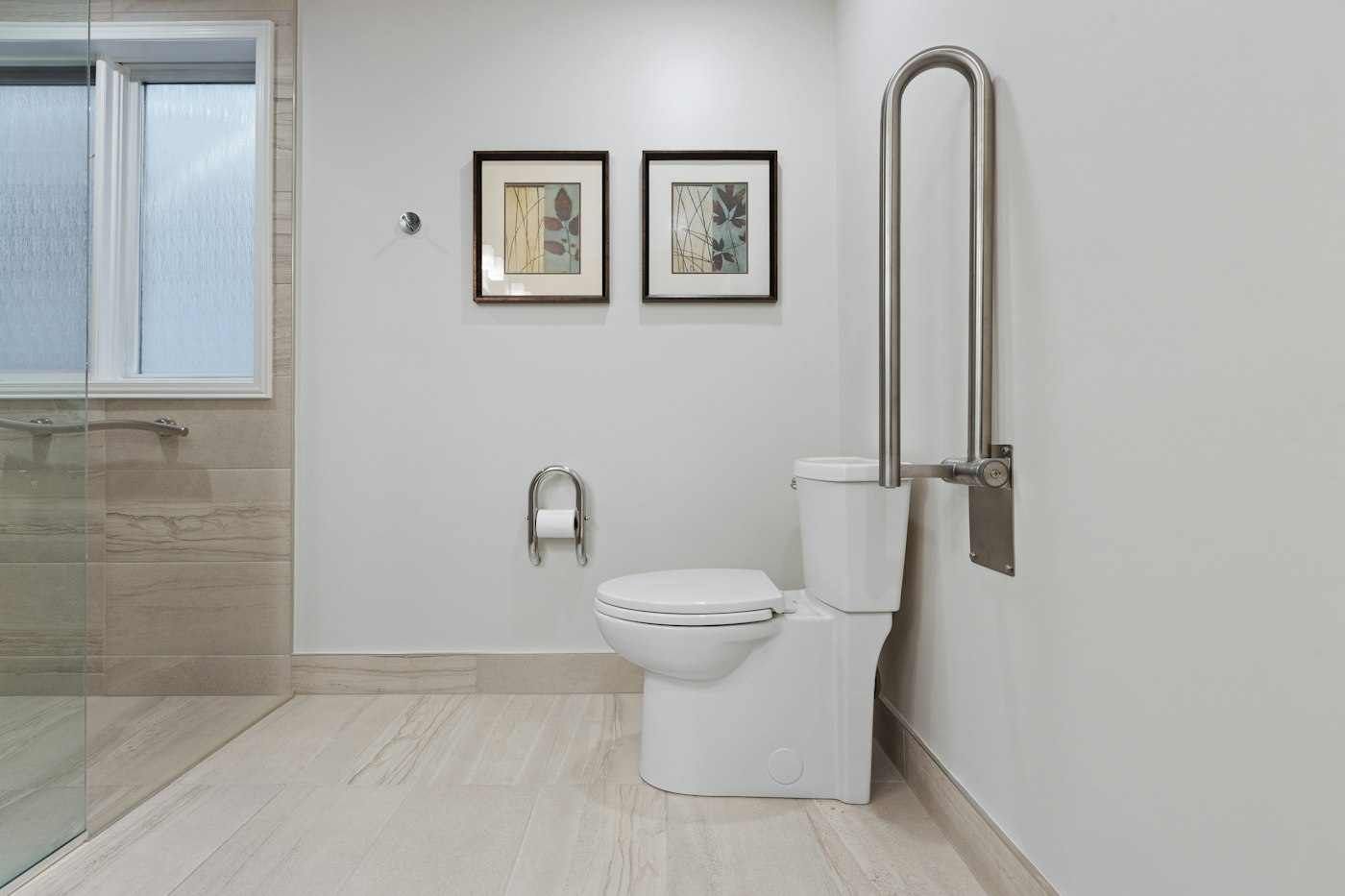
- Most home hazards are ordinary: a loose rug, a dim hallway, a step nobody notices, a rail that is not quite there.
- A calm, room-by-room walk-through takes about 30 minutes and finds most of the easy wins.
- Do it with the person who lives there, at the times of day they actually use each space.
- A walk-through does not replace an OT assessment. It helps you decide what to ask for.
Falls and near-misses at home are rarely dramatic. They happen on the way to the bathroom at night, on a wet step, while reaching for something on a high shelf. The home has been the same for years, so nobody sees the hazard any more. A structured walk-through is a way of seeing it again.
This guide takes you through the home from the street to the bedroom. Tick things off as you go, write down what you find and decide what to do first.
Do this together with the person who lives in the home, and ask them what is hard, not just what looks risky. Their daily experience is the most important information you will collect.
How to do the walk-through
- Choose the time
Do it once in daylight, and the night route again in the dark.
- Walk the real route
Follow the path the person actually takes: front door, hall, kitchen, bathroom, bed. Do not tidy up first.
- Ask, watch, then look
Ask what is difficult. Watch how they move. Only then look at the fittings.
- Take notes and photos
Photos help later, for trades, an OT or a funding application.
- Sort into three piles
Fix today, plan soon, and ask a professional.
Start outside: approach and entry
- The path is flat, even and free of moss, loose pavers or cracks
- Steps have a handrail and are clearly visible, including their edges
- There is a light at the door that comes on when needed
- The door can be opened and locked without twisting or heavy force
- The threshold is low, or there is a ramp that is safe in the wet
- There is somewhere to put a bag or parcel while finding keys
- The house number is easy to see for visitors and emergency services
- Anything blocking the path, such as bins or pots, has been moved
Entries are where ramps, rails and keyless locks make the biggest difference. If there are steps you cannot avoid, see our guide on rails and where they go wrong, and ask about a ramp or step rail.
Hallways and living areas
- Floors are clear of cords, mats with curled edges and clutter
- Rugs are removed or firmly fixed, including the edges
- Furniture is arranged so there is a clear, wide path
- Lighting is even, with no dark corners
- There are chairs at a good height with firm arms to push up from
- Heavy or frequently used things are stored between hip and shoulder height
- Phones or alarms are within reach of the main seating spot
- Doorways are wide enough for any walker or wheelchair
The kitchen
The kitchen mixes heat, water, sharp objects and a lot of reaching. A short walk-through can find the main risks.
Move everyday items to between hip and shoulder height. Avoid step stools if balance is a worry. Consider pull-down shelves or lower cupboards with pull-out drawers.
Check the stove controls are easy to see and reach. Consider an automatic cut-off or a stove guard if memory is a concern. Make sure a working smoke alarm is nearby. See our guide to smoke alarm rules in NSW.
Non-slip flooring, wiped-up spills and mats that do not slide. Benches at a height that suits the person, sitting or standing.
Lever taps and D-shaped handles are easier than round knobs for stiff hands. A kettle tipper or a light jug reduces lifting.
The bathroom and toilet
This is the room where falls most often cause harm, because of wet surfaces, hard edges and moments of getting up and down.
- The floor is non-slip, with no loose bath mats
- There are grab rails by the toilet, the shower and the bath, fixed into solid backing
- The shower has a hob or step that is manageable, or a hobless entry
- There is somewhere to sit in the shower if needed
- The toilet height suits the person, and they can get up without struggle
- There is a night light on the route and in the room
- Taps, soap and towels are reachable without leaning or twisting
- The door opens outwards or can be unlocked from outside in an emergency
A rail that is fixed only into tile or plasterboard can pull away under weight. Rails should be fixed into solid framing or proper backing. If you are not sure, ask a qualified tradesperson.
For a deeper look at bathrooms, including funding and how modifications are planned, see our guide to what an OT home assessment involves.
The bedroom and the night route
- The bed is at a height where feet reach the floor when sitting
- A light is reachable from bed, or comes on automatically
- The path from bed to toilet is clear and lit
- A phone or alarm button is within reach of the bed
- Clothes, shoes and walking aids are set up in an easy order
- There is a firm chair to sit on while dressing
- Cords, rugs and pet beds are out of the walking path
Night is when many falls happen. See our guide to night lighting for safer bathroom trips for more.
Stairs, steps and level changes
- Handrails on both sides where possible, running the full length and a little beyond the last step.
- Visible edges. A contrasting strip on each step edge makes the change of level easier to see.
- Even steps. A step that is slightly taller or shorter than the others is a common trip.
- Good light at top and bottom, with switches at both ends.
- Nothing stored on the steps. Even for a short time.
Laundry and outdoors
- Can the person reach the machine controls, the line or the basket without strain?
- Is the path to the clothesline flat and non-slip, with enough light?
- Are steps, drains and garden edges easy to see?
- Are garden tools and hoses put away?
Safety systems and emergencies
- Smoke alarms are working, tested and not older than ten years
- There is a plan for getting out at night, and the person knows it
- There is a way to call for help from every room where it might be needed
- Emergency numbers are on the fridge or by the phone
- Keys or access for emergency services or trusted people are arranged
- Medicines and important papers are stored where they can be found
Score your walk-through
- There is a step or level change at the entry that is hard to manage
- The bathroom has no rails, or the rails feel loose
- The shower or bath is difficult to get in or out of
- The night route is dark or has hazards
- Someone has fallen or nearly fallen in the last year
- Reaching, bending or lifting in the kitchen is difficult
- Doors, taps or locks are hard to use
- There is no easy way to call for help from the bed or bathroom
What to do with what you found
| Type of finding | Examples | Who to ask |
|---|---|---|
| Fix today | Remove loose rugs, clear cords, move items to easy heights, add plug-in night lights | You, family or friends |
| Plan soon | Add rails, lever taps, brighter bulbs, a bedside phone or alarm | A handyperson, an installer or a trade |
| Ask a professional | Bathroom changes, ramps, wiring, structural work, equipment choice | An occupational therapist and a licensed trade |
| Need funding | Larger modifications and assistive technology | A funding coordinator, your plan manager or an OT, who can provide the evidence |
When to ask an occupational therapist
An OT looks at the person, the tasks they want to do and the home, together. A walk-through tells you what is wrong; an OT helps decide what to do about it and writes the report that funders ask for. Ask for one if falls are a worry, if the person's needs are changing, if hospital discharge is near, or if larger changes are being considered. See our guide to what an OT home assessment involves.
Myths and misunderstandings
"We have lived here for years, we know the house."
Familiarity hides hazards. Changes in vision, strength and balance mean old routes can become risky.
"Safety changes make the home look like a hospital."
Good design blends in. Modern rails, lighting and fittings can look like part of the house.
"We will wait until something happens."
Small changes made early are cheaper and easier than changes made after a fall or a hospital stay.
"It is only for older people."
Anyone with a disability, injury or long-term condition can benefit.
How we help
If your walk-through turns up things you would like help with, we visit, look at the home with you and give a clear quote. We work alongside OTs and plan managers, and we are upfront about what we can and cannot do. See our services or book a free site visit.
Your first week: a simple action plan
You do not have to do everything at once. This sequence keeps things moving without overwhelm.
- Step 1
Do the walk-through with the person.
- Step 2
Take photos of hazards.
- Step 3
Fix the easy items the same day.
- Step 4
Make a list for trades or an OT.
- Step 5
Book the assessment or quote.
- Step 6
Walk through again in three months.
Plain-English glossary
- Trip hazard
- Anything on the floor that can catch a foot.
- Contrast
- A visible difference in colour or tone between surfaces.
- Transfer
- Moving between bed, chair, toilet or shower.
- Hobless shower
- A shower with no step or lip at the entry.
What happens at a Nemco site visit
If you would like a second pair of eyes, we visit the home, listen to the person first and look at the spaces they actually use. We take measurements and photos, check access for tradespeople and talk through the options in plain language, including simpler or cheaper ones where they will do the job. You then receive a written, itemised quote that your therapist, plan manager or family can read and compare. There is no obligation to proceed, and we will tell you if something is outside what we do. We also explain what each step involves for the person living there, how long the work is likely to take, whether the home can be used while it happens, and who to call if something does not work as expected after handover.
What to have ready
- Any therapist or hospital letters, or the name of the person coordinating care
- Photos or a rough sketch of the rooms involved
- A list of the times of day the person finds things hardest
- Landlord, strata or owner details if the home is not owned
- Your funding pathway, if you know it, or the name of the plan manager
When to bring in a professional sooner
If the person has had a recent fall, a change in health, a hospital stay or a new diagnosis, or if you are unsure whether a change is safe, speak to an occupational therapist or doctor before making changes. A quick conversation early can save money and avoid doing the wrong thing.
Questions to talk through at home
- What is the hardest room at the moment?
- Has anyone had a near-miss?
- What can be fixed this weekend?
- Who should we ask about the rest?
Last checked: November 2026. Rules, prices and program details change, so confirm with the source before you act. This checklist is general information. It does not replace an assessment by a qualified health professional.
Common questions
How long does a home safety walk-through take?
About 30 minutes for most homes, longer if you want to test the night route in the dark.
Do I need an OT before making changes?
Not for simple fixes, but for larger modifications or if you want funding, an OT assessment is usually needed.
What is the most common hazard?
Loose rugs, clutter, poor lighting and wet or uneven surfaces are among the most common.
Can I do this for someone else?
Yes, but involve them. Their experience of what is hard matters most.
Is there a cost to book a site visit?
Our site visits are free. See the booking page for details.